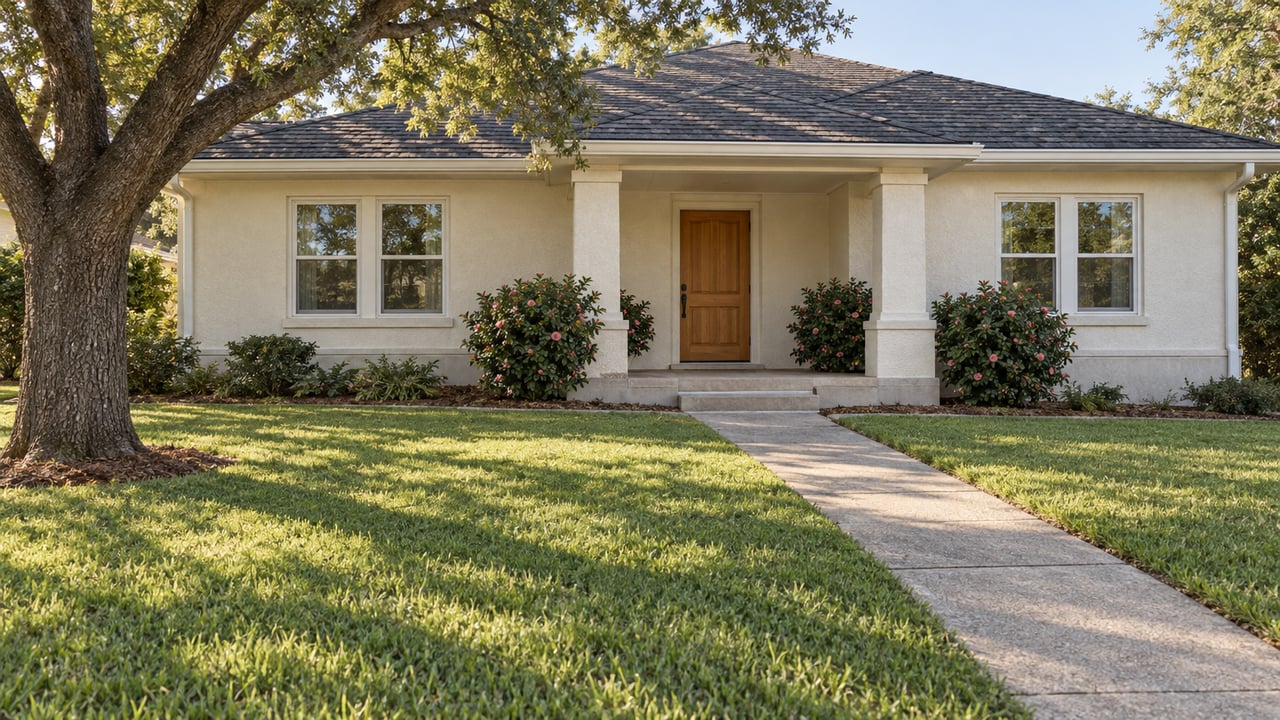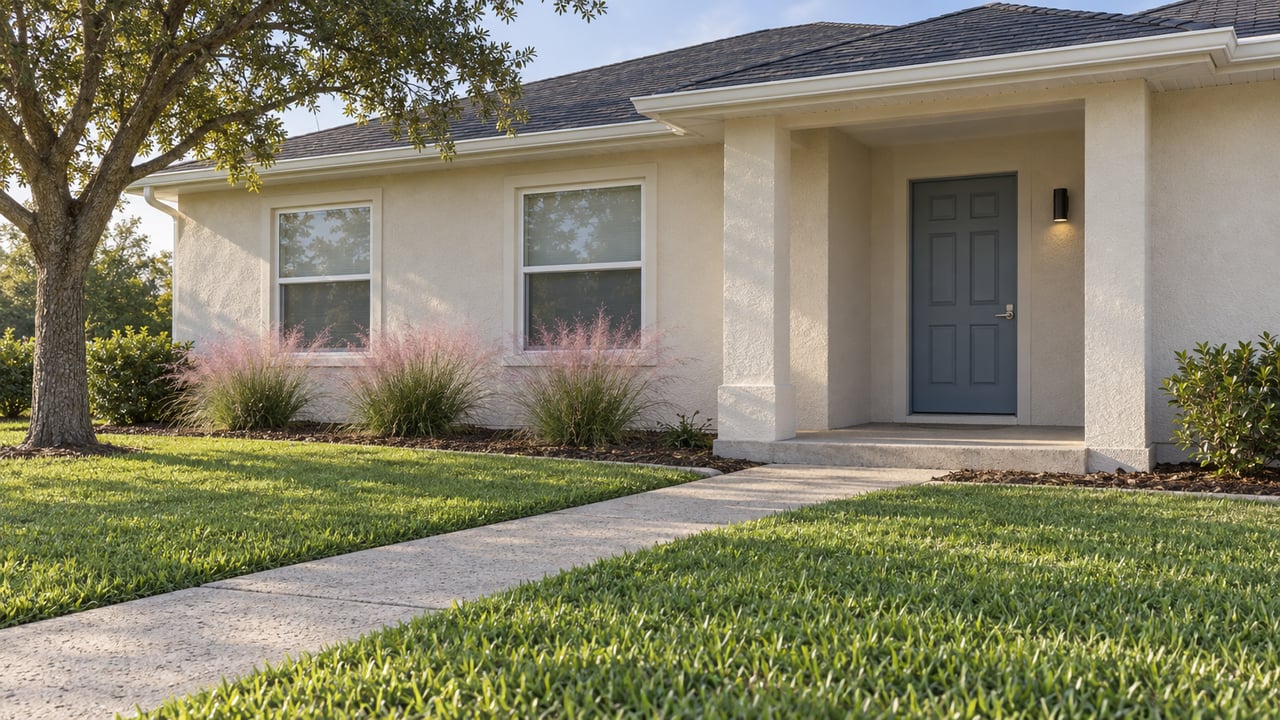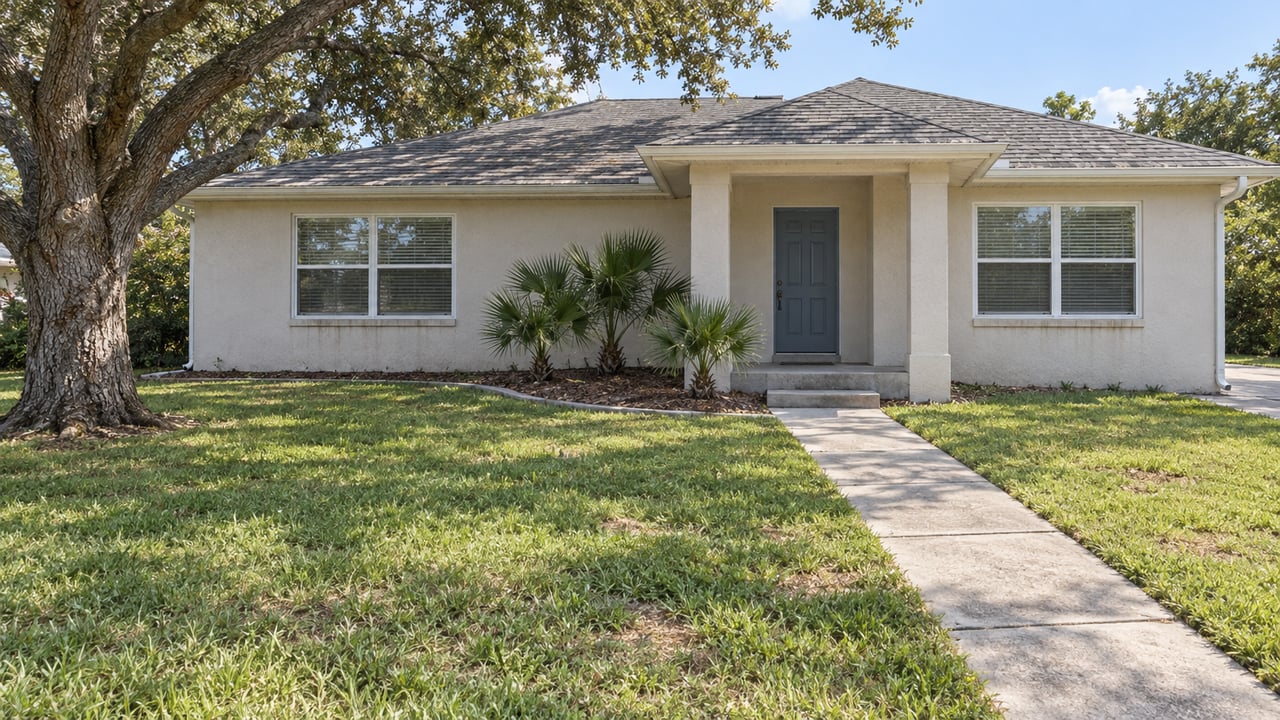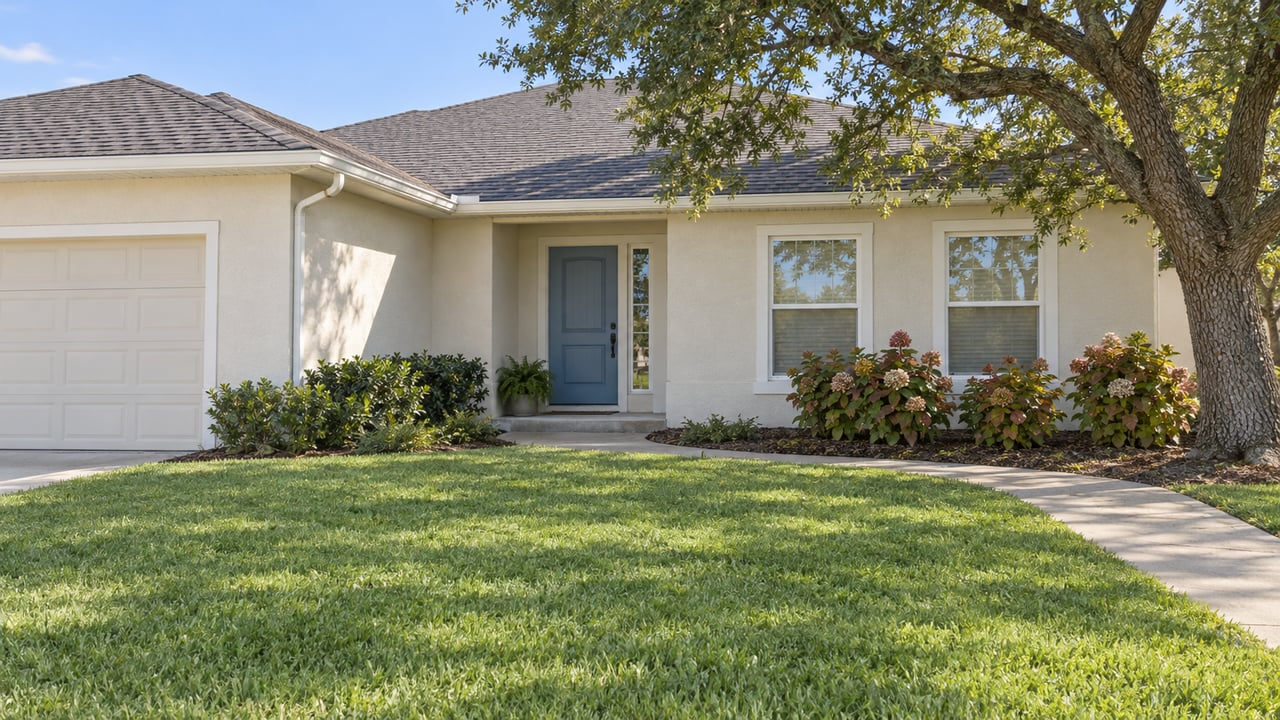
Picture two villas on the same Stone Creek street. They have the same floor plan, the same assessed value and the same homestead exemption. Under Florida's Amendment 3, which goes to voters on November 3, their owners could still get different property tax bills for years. The only difference would be that one owner was a Florida resident on December 31, 2026, and the other moved down from Ohio in the spring.
That gap matters in a community like Stone Creek, where many buyers come from out of state. As written, the amendment ties the full benefit to a calendar date. The neighborhood would end up with two groups of homesteaders paying under different rules.
The sentence that creates two groups
Amendment 3 is the only measure on the 2026 ballot that changes homestead property taxes. The other two amendments cover the Budget Stabilization Fund and tangible personal property on agricultural land. The headline change is a larger homestead exemption. The residency rule sits in the middle of the official ballot summary, published by the Florida Department of State:
Persons who are not Florida residents on December 31, 2026, will receive the existing homestead exemption upon qualifying for a homestead exemption, with the increased homestead exemption beginning with the fifth year of exemption, to the extent permitted by the U.S. Constitution.
The enrolled joint resolution sets the line more precisely. The delayed group is anyone who takes title and makes the home their permanent residence on or after January 1, 2027, and who "had not maintained a permanent residence in this state as of December 31, 2026." A buyer who already lived in Florida by that date, in Gainesville, Tampa or another part of Ocala, does not fall into the delayed group. They would still have to qualify for homestead on the new home in the usual way.
The Legislature passed the measure as HJR 1-F during a June special session. The House voted 75 to 26 and the Senate 30 to 9 on June 2, 2026.
What each owner would be exempt from
The Ocala Gazette's October 6 voter guide lays out the current baseline. Homeowners now get up to $51,411 in exemptions: $25,000 that applies to all taxes, including school taxes, plus up to $26,411 that applies to non-school taxes only. Here is how the amendment would change that for each group:
| Exemption against | Today | Florida resident by Dec. 31, 2026 | Not a Florida resident by Dec. 31, 2026 |
|---|---|---|---|
| School district taxes | $25,000 | $25,000 | $25,000 |
| Non-school taxes, 2027 | Up to $51,411 combined | $150,000 | $50,000, adjusted for inflation |
| Non-school taxes, 2028 | Up to $51,411 combined | $250,000, adjusted for inflation from 2029 | $50,000, adjusted for inflation |
| Non-school taxes, fifth year of exemption onward | Up to $51,411 combined | Full increased exemption | Full increased exemption |
For the newcomer, the non-school exemption in those early years stays about where it is today. The longtime resident's exemption roughly triples in 2027 and then rises again. The amendment would take effect January 1, 2027.
Why the gap depends on millage more than home value
Above a certain value, the size of the house barely affects the gap. Florida TaxWatch's Property Tax Resource Center assumes a homesteaded property whose assessed value is above the exemption in each year. It then multiplies the total non-school millage rate by $98.59 for 2027 and $198.59 for 2028. Those multipliers are the added exempt value per mill. Once a home's assessed value clears $250,000, the dollar benefit is fixed by the tax rate, not the house.
Location changes the result. ClickOrlando's October 5 report published TaxWatch's estimates by jurisdiction, and the two Marion County rows that matter most for southwest Ocala buyers are far apart:
- Unincorporated Marion County: about $406 in estimated savings in 2027 and $819 in 2028
- City of Ocala: about $1,059 in 2027 and $2,133 in 2028
TaxWatch builds its numbers from county, municipal and water management district millage. It tells anyone outside city limits to choose "Unincorporated area." A home that pays city millage on top of county millage has more non-school millage for the larger exemption to cancel out.
This affects Stone Creek directly. Marion County's Board of County Commissioners reviewed Stone Creek by Del Webb Solaire Phase 1 as a Planned Unit Development "located in the southwest portion of the County." The taxing authorities on your own tax bill are the reliable test for which row applies. If a Stone Creek parcel has no city millage, the newcomer's forgone benefit would be close to the unincorporated figure, since the newcomer's $50,000 exemption is near today's level. Compared with a neighbor who was a Florida resident by the cutoff, that works out to roughly several hundred dollars a year in 2027 and a little over $800 a year from 2028 until the newcomer's fifth year of exemption.
The gap that already exists, and the parts the amendment leaves alone
Stone Creek already has differences in tax bills between neighbors. Florida's Save Our Homes cap limits annual increases in a homestead's assessed value. The Florida Department of Revenue lists the 2026 cap at 2.7%. An owner who has held a homestead for years has an assessed value that has risen slowly under that cap. Amendment 3 keeps that cap at the lesser of 3% or CPI, and Florida TaxWatch reports that portability, which lets a Florida homesteader carry part of that capped benefit to a new home, stays the same.
That means the residency line would add to the existing gap. A relocator who arrives in 2027 would have no capped history and the smaller exemption. A Florida resident moving within the state could bring portability and qualify for the larger exemption. A longtime owner would keep the capped value and get the larger exemption.
Several parts of a Stone Creek owner's costs would not change:
- School taxes. The extra exemption does not apply to school levies, so the $25,000 school exemption stays where it is.
- Non-ad valorem assessments. The homestead exemption excludes "assessments for special benefits." In September, Marion County approved its FY 2026-27 stormwater, residential solid waste and fire rescue assessment rolls with no rate increases, according to a Citizen Portal report. A separate Citizen Portal article gives the residential solid waste charge as $215 per unit.
- HOA dues. These are separate from property taxes. In Stone Creek, the fee varies widely by home series, as we covered in our breakdown of Stone Creek's HOA tiers.
Owners who keep a Stone Creek home as a second home would see a separate change. The amendment would lower the annual cap on assessment increases for non-homestead property from 10% to 5%. The Ocala Gazette lists second homes, rentals and businesses as the property types that cap covers.
Where Marion County fits in
A bigger exemption leaves less taxable value for the county to tax, and the county's budget was already tight. The Ocala Gazette reported in April that keeping the county's general millage at 3.09 would not cover FY 2026-27 operating costs and that staff were modeling 3.35 or 3.48 mills. A Citizen Portal report dated September 23 said the county set general fund millage at 3.35 mills, 13.18% above the rollback rate, as part of a $1,736,146,433 budget. That report and the county's hearing calendar give different adoption dates.
The Gazette's voter guide cites state Revenue Estimating Conference figures showing Marion County government, its cities and special districts losing about $87.6 million combined in FY 2027-28, growing to $170.9 million a year. The county government's share would rise from about $78.3 million to $152.2 million. The amendment would also limit county and city property tax spending to listed categories, including public safety, schools, infrastructure, natural resources, bond debt, employee retirement benefits, and operations. TaxWatch's estimates use fixed millage rates. Any change in rates after 2027 would change what both groups of Stone Creek owners actually pay.
The open questions before November 3
As of this week, the residency line is still a proposal, and several things could change it:
- The vote. A constitutional amendment needs at least 60% voter approval.
- The wording. On August 4, a Leon County judge ruled that the original ballot title and summary were misleading, as the Florida Phoenix reported. The amendment stayed on the ballot under a rewritten title, "Increased Homestead Exemption; Lower Cap on Increases in Non-Homestead Property Assessments."
- The constitutional caveat. The newcomer delay applies only "to the extent permitted by the U.S. Constitution," a limit written into the measure itself.
- The procedure. The enrolled text leaves the procedures for administering the residency rule to the Legislature, to be set by general law. That means the documents that would prove residency as of December 31, 2026, have not been defined yet.
A short FAQ
Does the cutoff depend on when I buy in Stone Creek, or on where I lived? The enrolled text ties it to whether you "had not maintained a permanent residence in this state as of December 31, 2026." Where you lived matters, not just the closing date. How residency would be proven is still up to the Legislature.
Would a newcomer ever get the full exemption? Yes. The ballot summary says the increased exemption begins "with the fifth year of exemption."
Would the amendment lower my school taxes? No. School levies keep the $25,000 exemption.
This post is general information about a pending ballot measure. It is not legal, tax or financial advice, so please confirm how any of this applies to you with a tax professional or the Marion County Property Appraiser.
If you're weighing a Stone Creek resale or new build and want to see how the tax lines on a specific home's bill compare with its neighbors', the Stone Creek team at Next Generation Realty can pull those numbers with you and walk through what each line covers. Out-of-area buyers can also start with our guide to buying in Ocala from a distance, then reach out and contact us.